
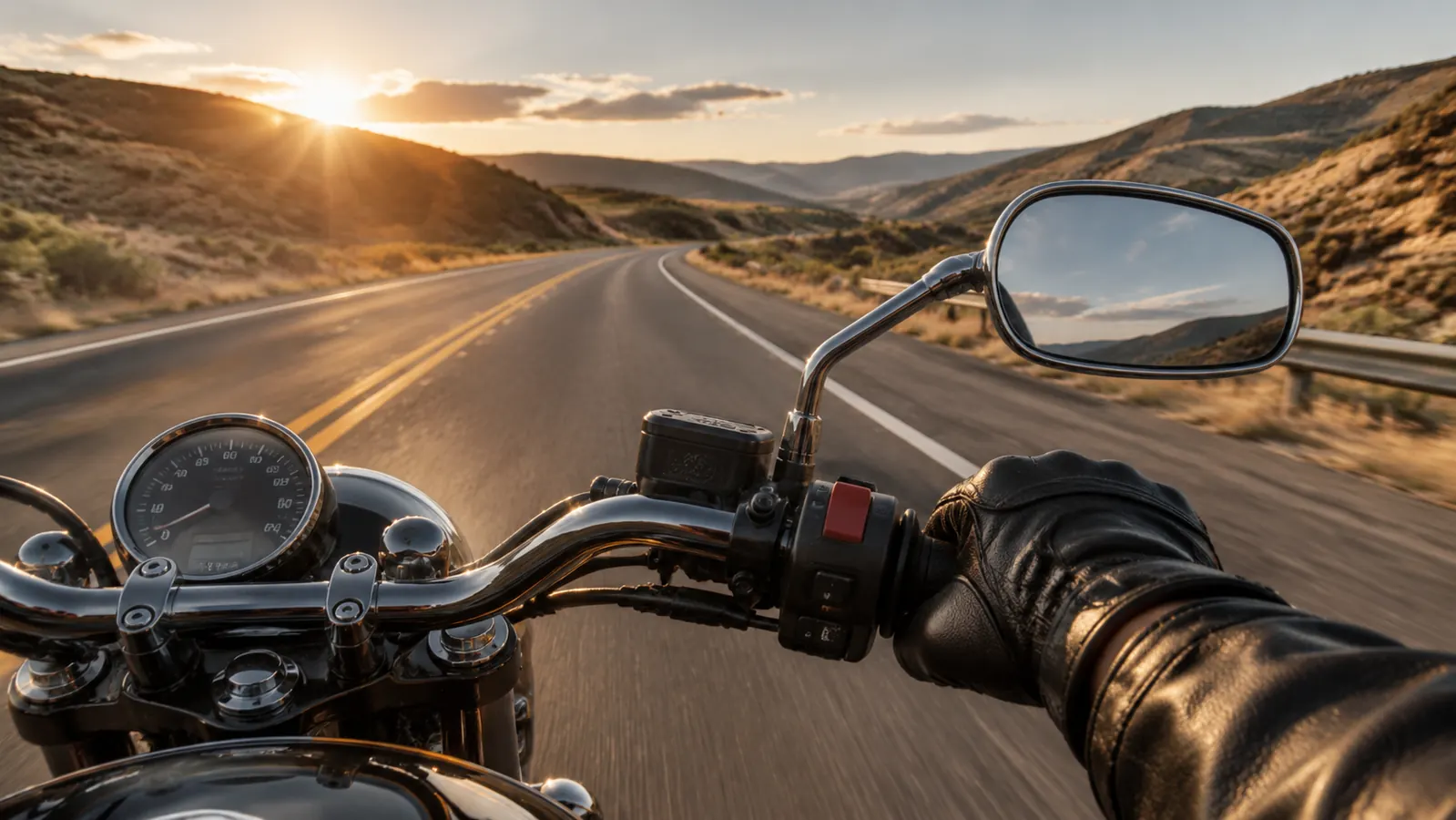
Here is the honest version. The Crampbuster is a piece of black plastic and rubber that clamps around your throttle grip and gives your palm a ledge to lean on. It will not hold your speed for you, it will not steer, and it will not fix a bike that vibrates like a paint shaker. What it will do is take the constant squeeze out of a long day in the saddle, and for me that has been worth every mile since I put one on.
I am Hank, I am 61, and I have been riding for about 35 years. My bike is a 2019 Indian Chieftain touring bike, and every year I ride from Pittsburgh down to Myrtle Beach, about 600 miles each way. Somewhere around mile 200 of a long day, my right hand starts to complain. The Crampbuster does not make the miles disappear. It makes the last 200 of them a lot easier to take.
The Quick Verdict
A simple, cheap, effective throttle assist that does exactly what it claims, as long as you do not expect cruise control.
Amazon Check Today's Price →Tired of your right hand going numb by mile 200?
The Crampbuster is a 10-minute install that changes how a long ride feels. It will not hold your speed for you, but it will give your palm something to do besides squeeze.
Amazon Check Today's Price on Amazon →What the Crampbuster Actually Is
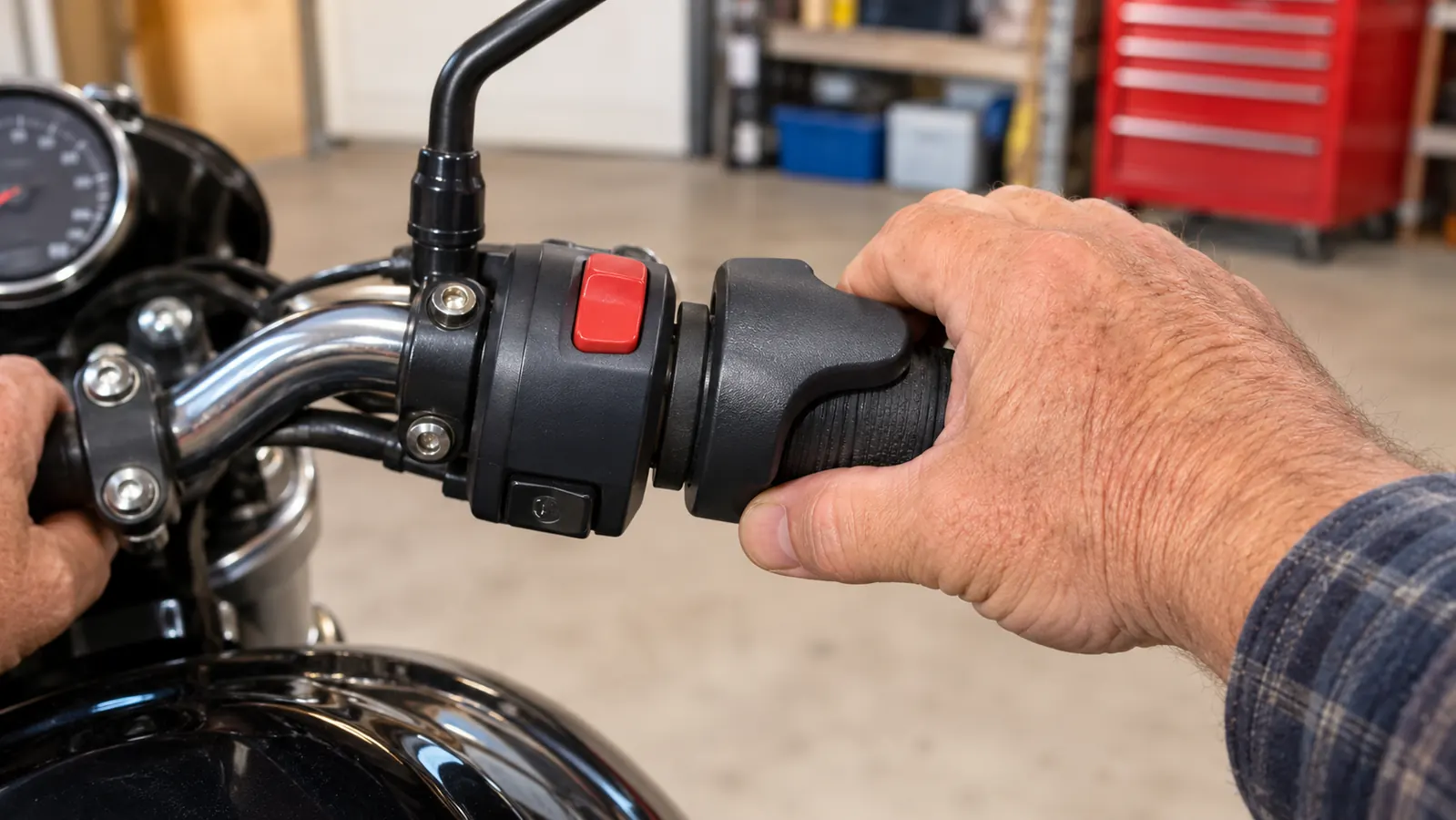
The Crampbuster is a throttle assist, sometimes called a throttle rocker. It is a molded piece of plastic with a rubber-lined clamp that wraps around the throttle grip on the right handlebar. The wing sticks out past the grip, and when you are cruising with your wrist in a neutral position, the heel of your palm rests on that wing instead of gripping the throttle tube. That is the whole trick. It lets your arm and your palm do the work of holding the throttle open instead of your fingers.
The one I have is the CB4 Black Throttle Mounted Motorcycle Cruise Assist from Crampbuster. It is a universal fit, which in practice means it fits the standard 1-3/8" throttle grip on my Chieftain. The package lists it as 6.75" long and 4.5" wide, and it weighs almost nothing, about 18 grams. It is made of plastic and rubber, and it is made in the United States. There is no wiring, no battery, no electronics, nothing to charge. It is a piece of plastic that does a mechanical job.
That is also the part nobody tells you in the product listing. Because it is mechanical, it only works when your hand is on it. The moment you take your hand off the throttle, the throttle snaps back to idle just like it always did. The Crampbuster does not lock anything. It does not hold your speed. It does not give you a rest stop for your whole arm. It gives your palm a place to rest while your hand stays on the grip. That distinction is the whole review.
To understand why that works, you have to understand what your hand is fighting. The throttle on my Chieftain has a return spring that wants to snap the grip back to idle the instant you let go. That spring is what keeps the bike from running away when you roll off, and it is a good thing. But it also means that holding any steady speed is a constant, low-level fight between your fingers and that spring. You do not notice it on a twenty-minute ride to the grocery store. You notice it at mile 300 of a day that started before sunrise. The Crampbuster does not remove the spring. It just gives your palm a bigger lever to push against, so the fight moves from your fingers to the heel of your hand, and the heel of your hand was built for that job. That is the whole mechanical story, and it is why a piece of plastic that weighs less than a roll of quarters can do something real. There is no battery to charge, no mode to set, no software to update. It is a lever, and levers have been earning their keep since before anybody put an engine on a frame.
How I've Used It
I bought the Crampbuster at the start of last riding season, which means I have had it for about a season and a half now. In that time it has done a couple of Myrtle Beach trips and a lot of weekend rides around Pennsylvania. The Myrtle Beach run is the real test. Six hundred miles each way, usually over two days with an overnight stop in Virginia. On the old setup, my right hand would start to ache around Winchester and be genuinely sore by the time I crossed into North Carolina.
With the Crampbuster, the difference showed up on the first long ride. The key is where you put your hand. You do not grip the throttle the whole time. You let the heel of your palm rest on the wing, and the wing holds the throttle open against the spring. Your fingers can stay loose, which means the muscles in your forearm are not working all day. I still move my hand around, I still grip the throttle when I need to, and I still take the occasional break at a rest area. But the constant low-grade squeeze is gone.
One thing I will say plainly: it took me about a hundred miles to trust it. The first time I rested my palm on that wing, my brain kept waiting for the throttle to creep closed. It does not. The spring in the throttle tube holds it right where you put it. Once I got used to the feel, I stopped thinking about it, which is exactly what you want from a piece of gear.
The most telling day was last September on the way down. Linda was in the car, which is her habit for the long run, and I left the house at 5:40 in the morning with the bike loaded. I hit rain south of Roanoke, about 240 miles in, and rode through it for the better part of an hour. On the old setup, that stretch would have been misery: wet gloves, cold hands, and the constant squeeze on top of it. With the Crampbuster I just dropped my palm onto the wing and let it hold the throttle while I flexed my fingers inside the gloves to keep the blood moving. I pulled into the motel in Virginia that evening with a right hand that felt like I had spent the day shaking hands, not like I had been strangling the bars for six hundred miles. That was the moment I stopped being a skeptic. I had read the forum threads where guys swear by these things and the other threads where guys call them a gimmick. I figured it was worth finding out which side was right. The rain south of Roanoke settled it. I am not saying the Crampbuster made a wet day fun. Nothing does that. I am saying it took one specific source of misery off the table, and on a day like that, one less thing matters.
Where It Helps
The Crampbuster shines on exactly one job: long, steady highway miles. If you spend your riding time on interstates and two-lane roads holding a constant speed for an hour at a time, this thing will save your right hand. My commute to the union hall used to leave my wrist tired. Now it does not.
It also helps in a way I did not expect. Because my fingers are not clenched around the grip, I have more feel in the bars. I notice small changes in the road surface sooner, and I am less likely to overcorrect when the bike wanders in a gust. A relaxed hand is a more sensitive hand, and on a heavy touring bike that matters.
It is also genuinely useful for anyone with arthritis or an old wrist injury. My right wrist has a few decades of pipefitting on it, and the difference between gripping and resting is the difference between a good day and a sore one. If you know someone who has given up long rides because of hand pain, this is a cheap thing to try before you give up on the riding.
The commute is the quiet test. The union hall is about forty-five minutes from the house, a mix of Route 51 and back roads, and I ride it a few days a week when the weather cooperates. Before the Crampbuster, I would get home and catch myself shaking my right hand out like I was trying to throw water off it. That stopped. The other place it earns its keep is the last stretch of the Myrtle Beach run, the part from Fayetteville down to the coast. That is flat, straight, and boring, exactly the kind of road where your hand gets tired because there is nothing else to think about. With the wing under my palm I can hold 65 with two fingers loose on the grip and my eyes on the road ahead. It turns the dullest part of the trip into the easiest part. And for riders with hand trouble, a few years back a surgeon told me my right wrist is wearing out a little early and suggested I stop gripping things all day. He did not tell me to stop riding, and I was not going to ask permission. The Crampbuster is the closest thing I have found to following his advice while still holding the throttle. If you have an old injury and you have been cutting rides short because of it, this is a cheap experiment before you park the bike for good.
The constant low-grade squeeze is gone. That is the whole review, and it is worth a lot at mile 400.
What Nobody Tells You
Here is the part the product listing does not put in big letters. The Crampbuster is not cruise control. It will not hold your speed for you, and it will not let you take your hand off the throttle. If you are looking for something that lets you stretch your arms out at highway speed, this is not it. You still have to keep your hand on the grip, and you still have to be ready to brake or roll off the throttle at any moment.
It also takes a little getting used to. The wing sits right where your thumb and forefinger meet, and for the first few rides I found myself bumping it when I reached for the controls. You will learn to work around it, but it is not invisible. On a bike with heated grips, you will also find that the Crampbuster covers part of the grip, which means part of your hand does not get the heat. That matters if you ride in cold weather.
And it does nothing for vibration. If your bike buzzes at highway speed, the Crampbuster will not change that. The buzz goes right through the plastic and into your palm. What it does do is remove the constant squeeze, which for me was the bigger problem. Your hand can be tired from vibration and tired from gripping, and they are different kinds of tired. The Crampbuster fixes one of them.
Gloves change the feel more than you would expect. With a thin summer glove, the wing sits right where you want it and you barely notice it is there. With a heavy winter glove, the extra bulk changes where your palm lands, and for the first few miles you will find yourself hunting for the sweet spot. I solved that by keeping the wing angled a touch higher in cold weather, which is a two-minute adjustment with a screwdriver. You will also learn that the wing is exactly where you want to grab when you are backing the bike out of a tight spot. That first time, you will bump it and think you broke something. You did not. It just lives there now. And here is the honest truth about the learning curve: it is shorter than the forum threads suggest. I read a lot of opinions before I bought one, and the complaints mostly came from riders who expected it to hold their speed while they stretched their arms over their head. That is not the job. The job is letting your hand rest in a natural position for six hours, and it does that from the first ride. The people who hate it are usually the people who wanted a different product. That is not the Crampbuster's fault, but it is worth knowing before you buy.
Installation and Fit
Installation is genuinely easy. The Crampbuster clamps around the throttle grip, and you tighten it until it is snug. I did it in the garage in about ten minutes, with nothing more than a screwdriver I already owned. The rubber lining keeps it from slipping, and once it is on, it stays put. I have never had it move on me, even on a rough road.
The fit is universal, which means it fits a standard 1-3/8" throttle grip. That covers most motorcycles on the road, but it is worth checking your grip size before you buy. If you have an aftermarket grip that is thicker or thinner than stock, the Crampbuster may not clamp down tight enough, or it may sit loose. On my Chieftain the fit is snug and correct.
One tip from experience: position the wing before you tighten the clamp. You want it angled so the heel of your palm lands on it naturally when your wrist is straight. If you set it too high or too low, you will either be reaching for it or bumping it with your thumb. I set mine, rode around the block, and adjusted it once. Ten minutes of fiddling saved me a season of annoyance.
Who This Is For
The Crampbuster is for the rider who does long miles and comes home with a sore right hand. It is for the touring rider, the commuter, the guy who rides two hours to see his sister and two hours back. It is for the rider with an old wrist injury who thought their long-distance days were over. It is a cheap, simple, honest piece of gear that does one job well.
Who Should Skip It
Skip it if you want cruise control, because this is not that. Skip it if you only ride in town for twenty minutes at a time, because you will not notice the difference. Skip it if you have a bike with a very unusual throttle grip size, because the universal fit may not work for you. And if you are hoping it will fix a vibration problem, it will not. Buy it for the hand fatigue, not for anything else.
What I Liked
- Takes the constant squeeze out of long rides
- Cheap, simple, and genuinely effective
- Universal fit works on standard 1-3/8" grips
- Ten-minute install with no special tools
- Made in the United States
Where It Falls Short
- Not cruise control, it will not hold speed on its own
- Wing can get in the way until you adjust to it
- Covers part of heated grips
- Does nothing for vibration
A 10-minute install that changes how a long ride feels
If your right hand is the reason you skip the long rides, the Crampbuster is worth a try. It is simple, it is cheap, and it does exactly what it claims.
Amazon Check Today's Price on Amazon →