
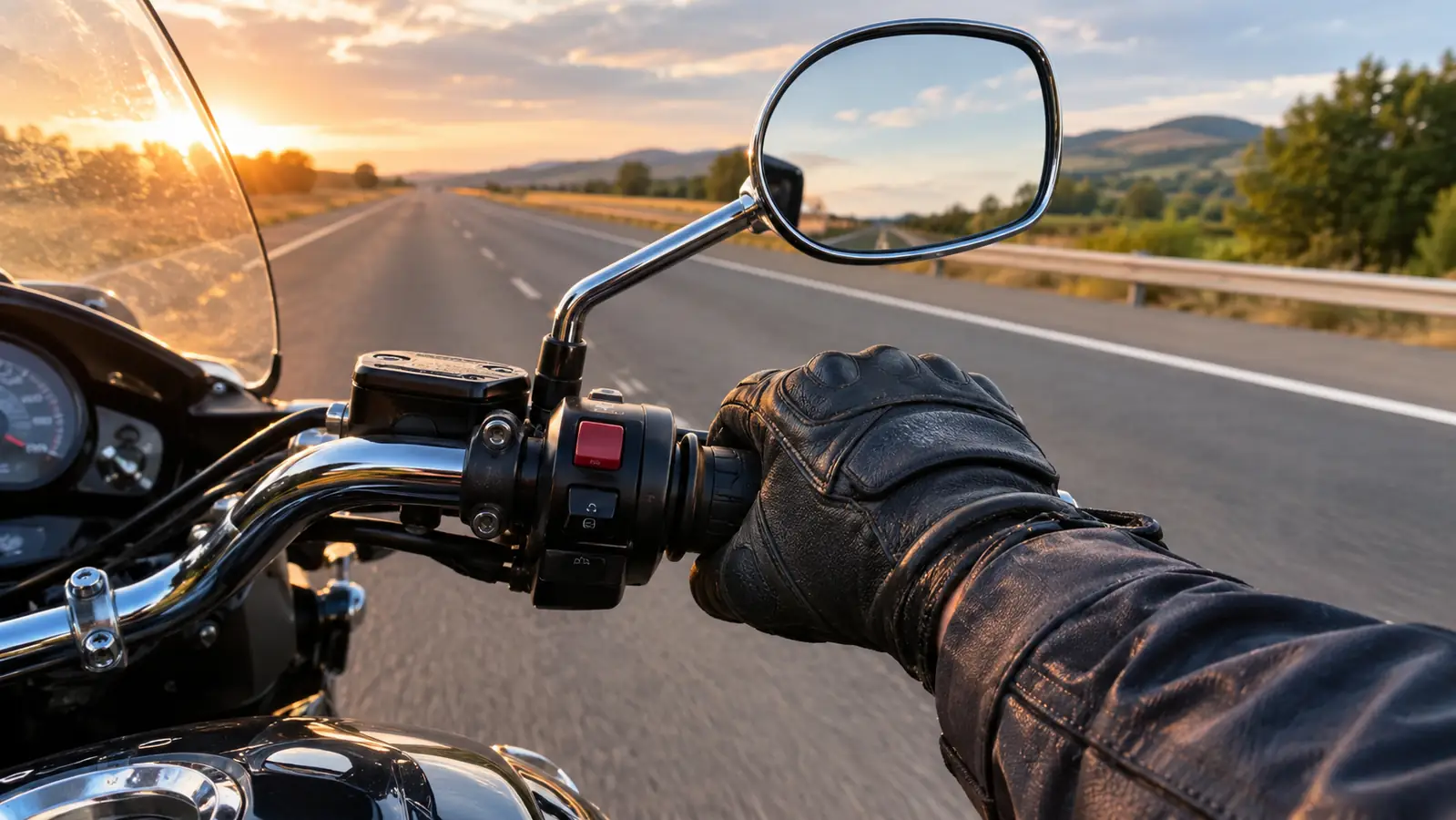
Somewhere around mile 250 of a long day, my right hand starts doing that thing where it goes numb, then tingly, then just plain angry. I'm Hank, I've been riding for about 35 years, and on a 600-mile day to Myrtle Beach the throttle grip is the part of the bike I think about most. A friend handed me a Crampbuster cruise assist two seasons ago and told me to just try it. I bolted it on before the next weekend ride, and it has stayed on the bike ever since.
This is the long-term review I wish I'd found before I bought one: what the Crampbuster actually does for your hand, how it holds up, and the honest limits that nobody mentions in the product photos.
The Quick Verdict
A small piece of molded plastic that does one job and does it well: it gives your throttle hand a place to rest, which means the end of a long day feels completely different. It will not hold your speed for you, and it is not a throttle lock. Buy it for the rest, not the cruise.
Amazon Check Today's Price →What I Liked
- Gives the throttle hand a real rest on long interstate days; the weight of your arm rests on the ledge instead of your fingers squeezing the grip
- Takes about two minutes to install and one screw to adjust; I found my position in two rides
- Small and light at 18 grams, it disappears on the bar and never interferes with the controls or the front brake
- Has held up through two seasons of rain, sun and a garage winter with no cracks, no hardening and no loose screw
Where It Falls Short
- Not a throttle lock: take your hand off and the throttle rolls back to idle, so it will not hold your speed for you
- Only helps the throttle hand; your left hand gets nothing, though it is not fighting a return spring either
- Takes a couple of rides to find the position that suits your hand size and riding position
- Some riders will always feel it as extra stuff on the bar if they prefer the bare grip
Your wrist should not be the first thing that hurts at mile 300
Two seasons in, the Crampbuster is the cheapest thing on my bike that I would replace the same day if it broke. It takes about two minutes to install and you will feel the difference on the first long ride.
Amazon Check Today's Price on Amazon →How I've Used It
I ride a 2019 Indian Chieftain touring bike, and my big trip every year is Pittsburgh down to Myrtle Beach, about 600 miles each way, usually over two days with an overnight stop in Virginia. The Crampbuster has done that round trip twice now, plus a lot of weekend rides around western Pennsylvania. That is the honest mileage claim: a couple of Myrtle Beach trips and a lot of weekend rides. Not a coast-to-coast expedition, but enough miles that I stopped noticing the thing was on the bike, which is probably the best compliment a piece of riding gear can get.
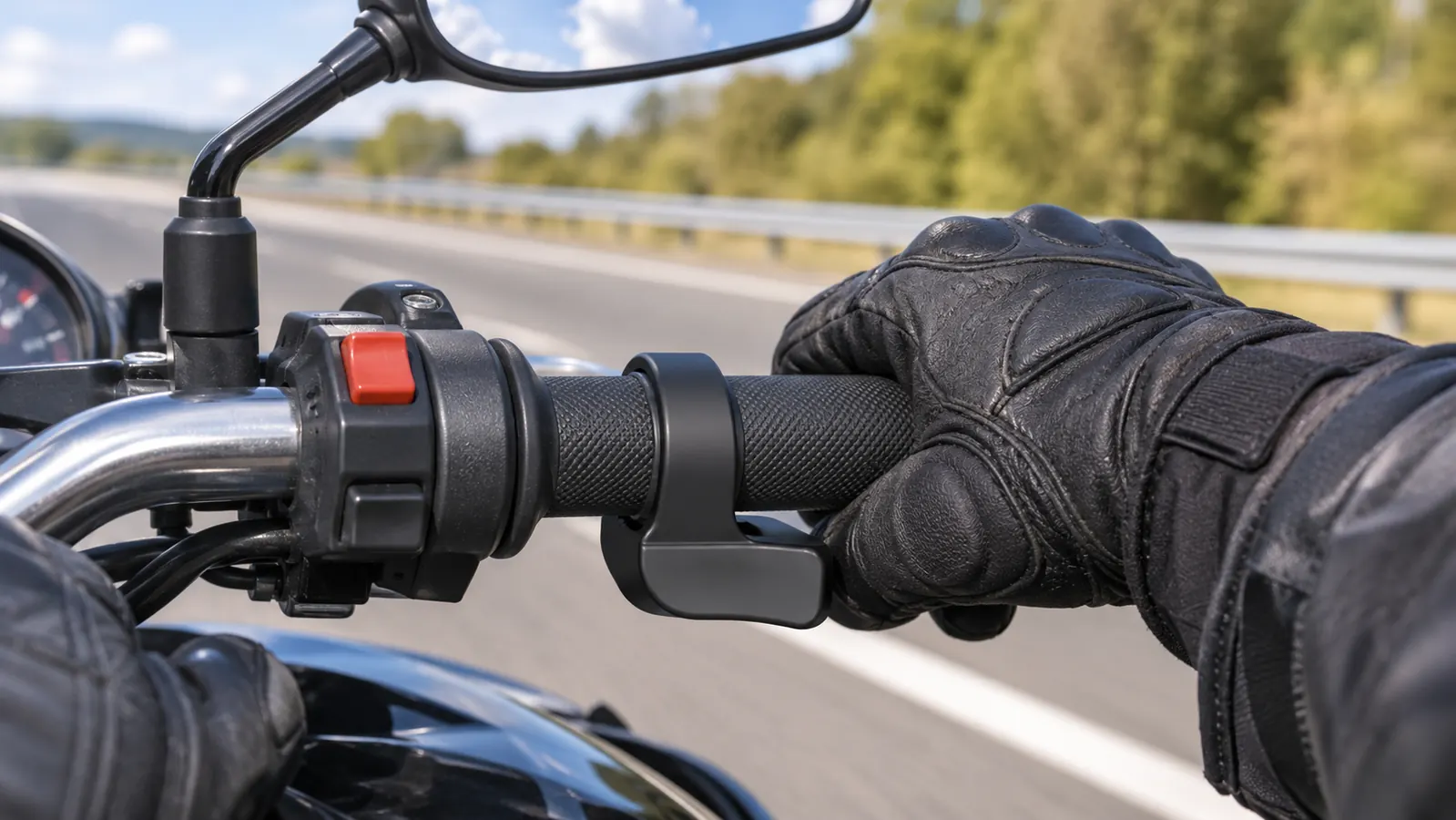
The install took me longer to find the right position than to actually bolt it on. The Crampbuster is a molded plastic and rubber piece that mounts on the throttle grip with a single screw, and the package includes the part labeled 70-1073. It fits a 1-3/8 inch grip, which is what my Chieftain has. You loosen the screw, slide it over the grip, rotate it to where your palm naturally falls, and snug it down. The first position I tried was too far forward. I moved it back about half an inch and that was the end of the fiddling.
The first real test was a Saturday in early May, two years ago. I rode from Pittsburgh out toward Johnstown and back, about 140 miles. I had set the Crampbuster the night before, and within the first hour I knew the position was close but not right. The ledge sat just under the heel of my palm, and I had to reach for it when I rolled the throttle open. By the end of that loop I had a clear idea of where it needed to sit. The next weekend, after one small adjustment, it stopped being something I noticed.
Here is the part that matters: the Crampbuster is not a throttle lock, and I want to be completely plain about that. It does not hold your speed. What it does is give the heel of your hand a ledge so you can relax your grip and let the throttle rest against the assist instead of squeezing the grip all day. You still control the throttle with your hand. The difference is that your hand stops being a clamp and starts being a guide. By the end of a 300-mile day, that distinction is everything.
What It Actually Fixes
The problem the Crampbuster solves is simple: a motorcycle throttle return spring does not care about your tendons. On a long interstate day you hold the grip against that spring for hours, and your hand slowly goes from fine to tired to numb. I used to get off the bike in Virginia and not be able to feel my right thumb for the first ten minutes. That has basically stopped happening.
The reason is the ledge. When my palm rests on the Crampbuster, the weight of my arm carries most of the load and my fingers just drape over the grip. I can still roll the throttle open and closed, still cover the brake, still do everything I need to do. I just do it with a relaxed hand instead of a death grip. On the interstate, where you are holding a steady speed for hours at a time, that is the whole ballgame.
It also helps on the days when the wind is pushing back at you. When you are fighting a headwind you naturally grip harder to hold your speed. The Crampbuster gives you something solid to push against, so the effort comes from your arm and shoulder instead of your fingers. I noticed this most on the way south last year when we had wind the whole first day. My right hand was the least tired part of me, which was a first.
The day that sold me on it permanently was the second leg of the Myrtle Beach trip last September, a Wednesday. I left the Virginia hotel at first light and did the last 300 miles with a hand that felt fresh, not because the bike was different, but because I had stopped strangling the throttle. Somewhere around the North Carolina line I realized I had not flexed my right hand once since breakfast. On the old setup, that would have been a two-handed event by lunch.
How It Holds Up Over Time
Two seasons is not a torture test, but it is a fair amount of weather. The Crampbuster has been rained on, baked in the sun, and left on the bike through a Pennsylvania winter in the garage. The plastic has not cracked, the rubber has not gone hard, and the screw has not backed out. I check it the same way I check everything else on the bike, maybe once a month, and it has never needed more than a quarter turn of snugging.
The whole thing weighs 18 grams, which is to say you will never know it is there when you are not riding. It is 6.75 inches long and 4.5 inches wide, and it does not get in the way of the controls or the switch housings. I have never once hit it by accident with my glove, and it has never interfered when I needed to grab the front brake in a hurry. The material is plastic and rubber, and it feels like it was made to sit on a grip for years, because that is exactly what it was made to do.
The one wear item is the rubber where it contacts the grip. After two seasons mine has polished up a little where it touches, but it has not slipped or spun on me. The screw is the only thing that could work loose, and it has not. I would call that a good report card for a part that costs less than a tank of gas.
Last October I got caught in a cold rain west of Harrisburg, the steady all-day kind that soaks through a jacket at the collar. The Crampbuster sat in that rain for three hours, then sat wet on the bike overnight. The rubber showed no softening, the plastic no clouding, and the screw turned the same as the day I installed it. I have also left the bike in the sun on ninety-degree days, and the plastic has not faded or gone brittle.
The Crampbuster did not change how I ride. It changed how my hand feels at mile 400, which is the same thing when you are still 200 miles from the hotel.
The Limits Nobody Mentions
Here is the honest part. The Crampbuster is not a cruise control, and if you buy it thinking it is, you will be disappointed. It does not hold your throttle position. Take your hand off the grip and the throttle rolls back to idle, same as it always did. On a long interstate day you still have to keep your hand on the throttle. What you get is a hand that is resting instead of squeezing, and that is a real difference, but it is not the difference between holding the throttle and not holding it.
I tested the limit myself on a straight stretch of I-79 north of Washington, Pennsylvania. I set the throttle at an even seventy, took my right hand off the grip, and counted. The speed started bleeding off almost immediately, ten miles an hour gone before I got my hand back. That is the honest answer to the question everyone asks: no, it does not hold your speed. What it does instead is let you ride at seventy with a hand that is barely touching the grip.
The second limit is that it is a one-hand tool. It helps your throttle hand and does nothing for your left hand. That is fine, because your left hand is not fighting a return spring all day, but it is worth saying plainly so you know what you are buying.
The third limit is setup. It takes a few rides to find the position you like, and the right position depends on how big your hands are and how you sit on the bike. What works for me on a touring bike with floorboards might not be perfect for a sportbike with rearsets on the first try. Give it a couple of rides before you decide. The good news is the adjustment is one screw and about thirty seconds, so dialing it in is not a project.
And one more honest note: if you are the kind of rider who likes to feel the throttle directly, who likes the bare grip under your palm, the Crampbuster will always feel like something extra on the bar. It is a small thing, but some riders never get past it. I got past it in about one ride.

Alternatives I Considered
The main alternative to a throttle assist is a real throttle lock, the kind that clamps the throttle where you set it so you can take your hand off entirely. I have used those, and they are a different tool for a different job. A throttle lock gives you true rest breaks on a straight interstate, but it adds a lever or clamp on the bar, and it only works when you remember to set and release it. The Crampbuster is always there, doing its job quietly on every mile, not just the straight ones.
There are also fancier cruise assists with more adjustment and a bigger footprint. I have not felt the need to try one. The Crampbuster is the simple version, and simple is what I wanted on the throttle end of my right arm. It is a universal fit part that works with the stock grip on my bike, and it has not given me a single reason to shop for something else.
Who This Is For
Buy the Crampbuster if you ride long miles and your right hand complains about it. That is the whole test. If you have ever gotten off the bike after a long day and flexed your right hand to get the feeling back, this is for you. It is also great for anyone who rides in wind a lot, or who has an older bike with a heavier throttle return spring, or who simply wants to stop white-knuckling the grip on the interstate. It is cheap, it installs in minutes, and it does not change the way the bike handles one bit.
Who Should Skip It
Skip it if what you actually want is a throttle lock that holds your speed while you take your hand off the bar. The Crampbuster will not do that, and no amount of wishing will make it do that. Skip it if you only ride short hops around town, because you will never notice the difference. And skip it if you simply do not like extra stuff on your handlebar. Some riders want the bar exactly as the factory made it, and I respect that. This is a tool for riders who have decided the factory grip alone is not enough on a long day.
Two seasons later, it is still on my bike
The Crampbuster is the rare accessory that does exactly what it promises: it gives your throttle hand a rest on long rides, it costs very little, and it has not given me a single problem in two seasons. If your hand gets tired at mile 250, this is the cheapest fix I know.
Amazon Check Today's Price on Amazon →