
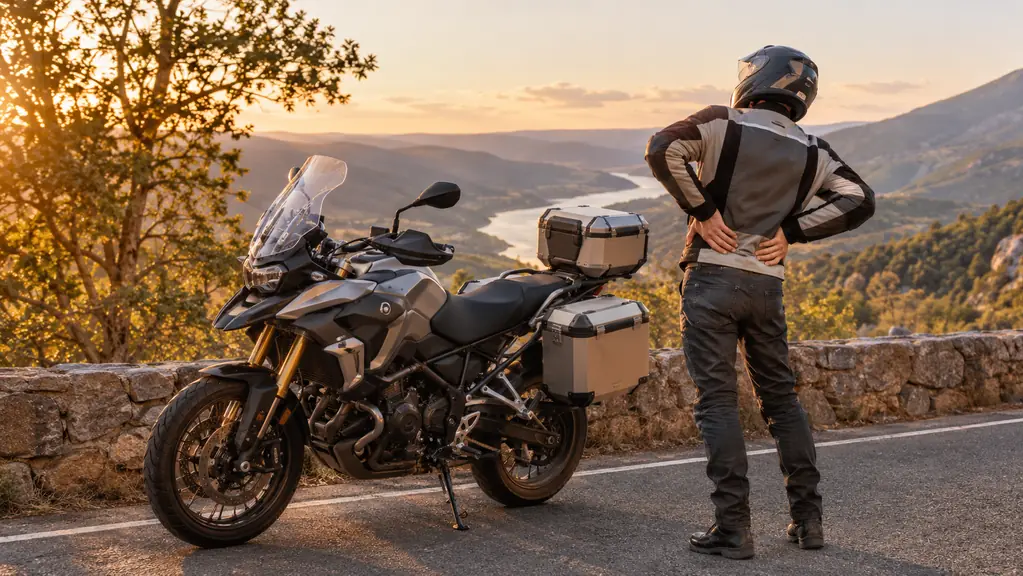
The first time my tailbone went numb on the interstate, I was somewhere south of Roanoke with 300 miles of Virginia still in front of me. I spent the rest of that day shifting my weight every few minutes, standing on the pegs when the road was straight, and doing math about how many exits were left before I could get off the bike. By the time I reached Myrtle Beach, I had already decided the stock seat on my 2019 Indian Chieftain had to change. The question was whether to spend custom-seat money or try something cheaper first. I tried the SKYJDM gel seat cushion. Two seasons later, it is still on the bike.
I am 61 years old and I have been riding for about 35 years, so I do not expect any seat to feel like a recliner after hour six. I know the difference between normal miles and a real problem. The problem was that my tailbone and hips would start complaining around mile 250 and own the rest of the day by mile 400. Linda, my wife, rides pillion with me on the shorter rides but takes the car on the Myrtle Beach trip, so the rider's seat is mine to fix. This is the story of the fix I tried and whether it held up.
The Quick Verdict
A large, breathable gel pad that turned my tailbone from the loudest voice on the interstate into background noise. It is not a custom seat, and you have to keep it out of the sun, but it is the best fix I have found for the money.
Amazon Check Today's Price →Mile 400 used to be my wall. Now it is just a gas stop.
The SKYJDM gel seat cushion is the first thing I have put on this bike that made a real difference on a 600-mile day. If your stock seat is the weak link on long rides, try this before you spend custom-seat money.
Amazon Check Today's Price on Amazon →How I've Used It
I bought the SKYJDM cushion at the start of the riding season before last, so it has now been through two full seasons, a couple of Myrtle Beach trips, and a lot of weekend rides. It lives on the rider's seat of my Chieftain for most of the season. It folds flat when I need to pack it or when the bike sits in the garage, and I take it off when I park in the sun. The care instructions say to avoid prolonged exposure to direct sunlight or extreme heat, and I have learned to take that seriously. It sits on the seat without any fuss, and it has never moved on me in a way that made me think about it, which is the best thing you can say about a seat pad.
On a normal weekend ride, I do not think about it much, which is the point. On the long runs, it earns its keep. I have done the Pittsburgh to Myrtle Beach run twice with it, both times over two days with the usual overnight stop in Virginia, plus a lot of 200 and 300 mile Saturdays. Linda has sat on it for a few pillion rides on the shorter loops, and she noticed the difference even on an afternoon out.
One thing I will say up front: it is not magic. It is a gel pad, not a new seat. But it does what it says, and two seasons in, it still does it.
What the Gel and the Honeycomb Actually Do
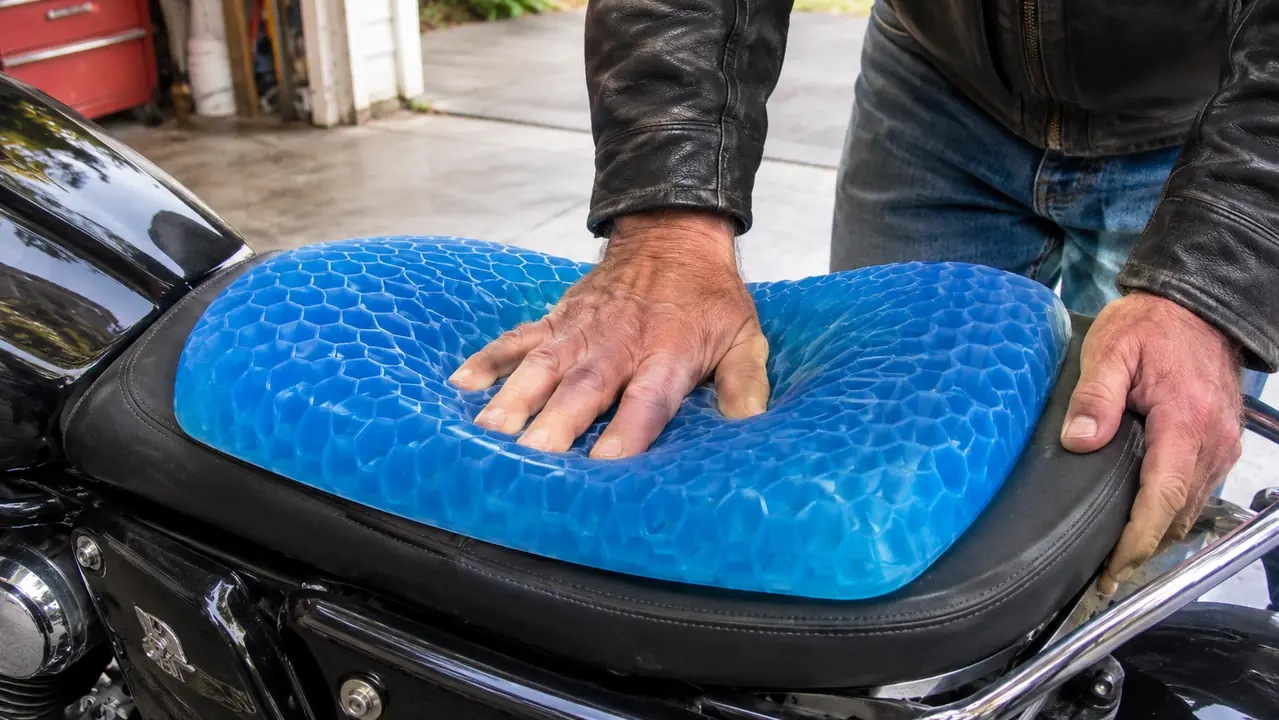
The cushion is built around a TPE gel fill, which is the soft, pressure-relieving layer that does the actual work. The firmness is rated soft, which is what you want under your tailbone. The shape is a butterfly, or petal, design, and the idea is to give your buttocks enough room to spread out so no single spot carries all the weight. It is a large pad, 1.18 inches thick, and it weighs 0.96 kg, which is a hair over two pounds. That is not heavy enough to notice on the bike, and it is light enough that carrying it around is no big deal.
The butterfly shape is not a styling choice. The way the pad narrows toward the front means it follows the curve of the seat instead of fighting it, and it leaves your legs room to work at stops. I noticed it the first time I set it in place: the pad sat flat, stayed where I put it, and did not slide around on the way to the gas station.
The other piece of the design is the 3D honeycomb structure inside the pad. That is what makes it breathable. On a hot day in July, a solid slab of gel under you would turn into a heat trap. The honeycomb lets air move through, which is the difference between a pad you forget about and a pad you peel yourself off of at every rest stop. I have had it out on days when the interstate was showing 90-something degrees. I would not call it cool, but it did not cook me the way the stock seat did.
It is also foldable, which matters more than you would think. When I stop for the night, I fold it and carry it into the motel room. That ties into the one real maintenance habit: keep it out of direct sun and extreme heat. A couple of times I left it on the seat while I ate lunch, and the pad came back soft and a little too warm for comfort. Now I treat it like a picnic cooler. It comes with me when the bike is parked. It folds down small enough to tuck under my arm, and I have carried it into more diners than I can count.
Two Seasons In: What Wears and What Doesn't
After two seasons, the gel still feels the same under me. No flat spots, no hard spots, no cracked edges. The honeycomb structure has held up, and the surface still looks about the way it did the day it showed up. I have not done anything special to it beyond folding it, wiping it down, and keeping it out of the sun.
The honest part: the care instructions are not a suggestion. TPE gel does not like extreme heat, and the label says so plainly. If you are the kind of rider who parks in the sun and forgets, you will either shorten the life of the pad or you will get tired of carrying it around. I made a habit of it, so it has not been a problem for me. I would be lying if I said it was zero hassle.
I also cannot tell you it fixed every ache. My knees still complain on long days, and my back still stiffens up. But the specific, sharp, sit-bone pain that used to start around mile 250, that is gone. That was the problem I bought the pad to solve, and it solved it.
The Myrtle Beach Test
The real test for me is the annual run: Pittsburgh to Myrtle Beach, about 600 miles, split over two days with an overnight stop in Virginia. On the first trip without the pad, I remember standing on the pegs at mile 300 just to get blood moving, and counting mile markers like a kid counts down the last week of school.
With the SKYJDM pad, the same run felt different. I still stopped every couple of hours, because you should on a long day, and I still got off the bike stiff, because 600 miles is 600 miles. But the specific, nagging sit-bone pain that used to own the second half of the day did not show up. By the time I rolled into the motel parking lot in Virginia, my tailbone was not the first thing I thought about when I stood up. That had never happened before. The return trip three days later was the same story. I left Myrtle Beach feeling like I had not used up my tailbone on the way down.
Linda noticed it too when she rode pillion on a shorter Saturday loop. She is not one to complain, but she has opinions about seats, and her opinion is that the pad is worth keeping. One thing to know: a pad on the rider's seat does nothing for the passenger seat. If you carry a passenger a lot, they will want their own answer. But for the person doing the miles up front, it works.

Tradeoffs You Should Know About
First, it adds a little height. The pad is 1.18 inches thick, so it raises you by roughly an inch. I am tall enough that it did not matter, but if you are shorter and already on your toes at stops, an extra inch is something to think about. It is a small change, but it is a real one.
Second, it is one cushion for the rider's area, not a full seat replacement. If you were hoping it would turn a touring saddle into a lounge chair, it will not. It does one job: it gives the rider's tailbone somewhere better to sit.
Third, the sun thing. I am going to say it again because it is the one way to shorten this pad's life. Do not leave it out in prolonged direct sunlight or extreme heat. Fold it, take it with you, or cover the bike. It takes ten seconds and it keeps the gel from breaking down.
Installation is not really a thing with this pad. You set it on the seat, adjust it once, and go. The specs say it is generally suitable for most motorcycles on the market, and that matches what I have seen. It covers the rider's area on my Chieftain without hanging over the edges, and it does not interfere with getting on and off the bike.
How It Compares to the Alternatives I Considered
Before I bought the SKYJDM pad, I looked at two other ways to fix the same problem. The first was a sheepskin seat cover, which a lot of touring riders swear by. Sheepskin breathes well and feels good, but it does not add much cushioning, and my problem was pressure, not just heat. The second was a custom seat, which is the real fix for a bike you ride every day. I was not ready to spend that kind of money on a bike that mostly does weekend duty. Two seasons later, I think it was the right call.
The sheepskin comparison is worth spelling out because they are the two most common cheap fixes. Sheepskin is better at managing sweat and heat on a hot day, and it looks great on a bike. The gel pad is better at the actual pressure relief, which was my complaint. If your problem is a sweaty back on a hot seat, sheepskin might be the answer. If your problem is a numb tailbone at mile 300, the gel pad wins.
What I Liked
- Real pressure relief for the tailbone on long days
- Breathable 3D honeycomb interior keeps the seat from turning into a heat trap
- Folds flat, so it packs easily and comes inside when you park
- Soft TPE gel that has held its shape through two seasons
- Works on most motorcycles, so it is an easy fix before you spend custom-seat money
Where It Falls Short
- You have to keep it out of direct sun and extreme heat, which means carrying it when you park
- Adds a little height to the seat, roughly an inch
- It is for the rider's seat only, so a passenger needs their own answer
- Not a cure for every ache; it fixes the sit-bone pressure and leaves the rest of the miles to you
By the Virginia overnight stop, my tailbone had gone from the loudest voice in my head to background noise.
Who This Is For
This is for the rider whose stock seat is fine for an hour and miserable by mile 300. The person who does a few long trips a year, or a lot of weekend miles, and does not want to spend custom-seat money on a bike that spends most of its life in the garage. It is also for the rider who wants to try a fix before committing to a bigger one. Two seasons in, I have no plans to take mine off. If you are 61 and you still want to do 600-mile days, you take the help where you can get it.
Who Should Skip It
Skip it if you ride 20,000 miles a year and live on the bike, because at that point a custom seat is the right answer and the pad is a stopgap. Skip it if you will not tolerate the parking habit, because the heat warning is real and ignoring it will shorten the pad's life. And skip it if you are short enough that an extra inch of seat height is a dealbreaker. For everyone else, it is the most honest fix I have found for a very specific, very annoying problem. That is not a criticism of the pad. It is the difference between a tool and a cure.
Try the cheap fix before you spend custom-seat money
The SKYJDM gel seat cushion has been on my bike for two seasons and two Myrtle Beach runs. If your tailbone is the reason you dread the second half of a long day, this is the place to start.
Amazon Check Today's Price on Amazon →