
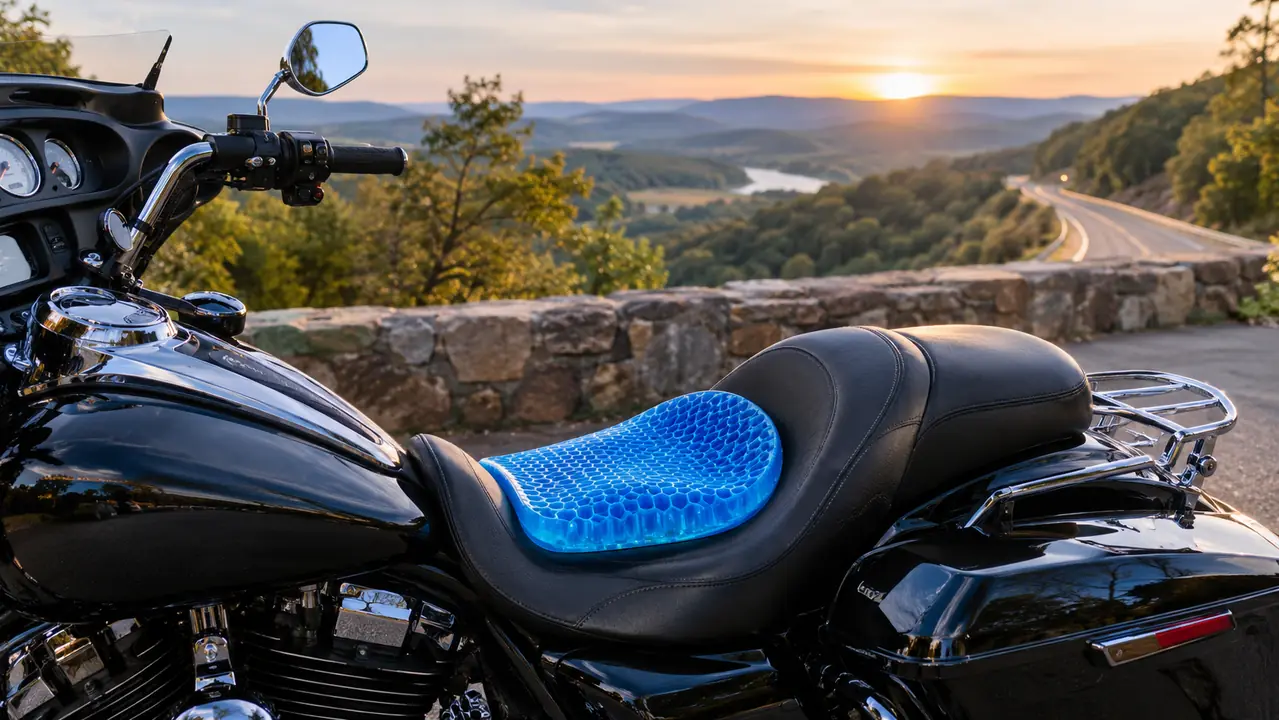
Somewhere around mile 250 on the Pittsburgh-to-Myrtle Beach run, every touring rider has the same thought: I should have done something about this seat. I've been riding for about 35 years, and I've tried my share of fixes. The two that people ask about most are gel cushions and sheepskin pads, so this season I ran both on the same bike, the same roads, and the same long days. Short version: the SKYJDM gel cushion handles pressure better and takes zero thought to maintain, but sheepskin still wins the heat and grip arguments. Which one you should buy comes down to what actually hurts at mile 400.
I'm not going to tell you one is objectively better, because they solve different problems. A gel pad does active work: it spreads your weight out and soaks up vibration before it reaches your spine. A sheepskin pad does passive work: it manages heat and moisture and gives you a grippy surface that keeps you planted. I used both on my 2019 Indian Chieftain, on the same routes, and I kept notes on heat, soreness, and how much fiddling each one took. Here's what I found.
| SKYJDM Gel Cushion | Sheepskin Seat Pad | |
|---|---|---|
| Pressure relief | Gel spreads your weight; honeycomb core absorbs vibration | Wool compresses but doesn't actively redistribute pressure |
| Summer heat | Holds warmth under you; care tag says avoid extreme heat | Wool breathes and wicks sweat away from your skin |
| Cold mornings | Gel sits at whatever temperature it is; no warmth | Wool holds heat and stays flexible in the cold |
| Grip | Sits on the seat; can shift on a smooth surface | Wool fibers grab your pants and the seat |
| Upkeep | Wipe it clean, fold it up, done | Needs washing, brushing, and slow drying |
| Packability | Foldable, 0.96 kg, 1.18 inches thick | Bulky even when rolled |
| Fit | Universal fit for most motorcycles | Often needs trimming or straps |
| Long-haul comfort | Targets the pressure points that hurt at mile 400 | Does more for climate than for pressure |
How I Compared Them
I did this the boring way. I put the SKYJDM gel cushion on my 2019 Indian Chieftain and rode my usual route to Myrtle Beach, about 600 miles each way with an overnight stop in Virginia. I ran the gel pad first, leaving Pittsburgh at 6:15 on a Tuesday morning in June, and the sheepskin two weeks later on the same weekday so traffic would line up about the same. Same route, same bags, same pace. I kept a notebook in the tank bag and wrote down three things: when I started shifting around, how hot the seat felt at rest stops, and what each pad needed at the end of the day. I also got in the habit of pressing my palm flat against the seat every time I stopped for gas, because that tells you more than a spec sheet ever will.
I'm not a test lab, and I'm not going to pretend otherwise. I'm a retired steelworker who rides a lot of interstate miles and has opinions about what works. I've been riding for about 35 years, and I took a rider safety course again at 55 just to brush up. So call this one rider's experience, not a scientific study. But I rode both pads on the same roads in the same season, and the differences were consistent enough that I trust them. I also rode one day in the rain, a steady soaker from Roanoke to the North Carolina line, because that's when a seat pad earns its keep or gets found out. The gel pad shed the water and wiped dry at the first gas stop. The sheepskin held it and needed a full day to dry out.
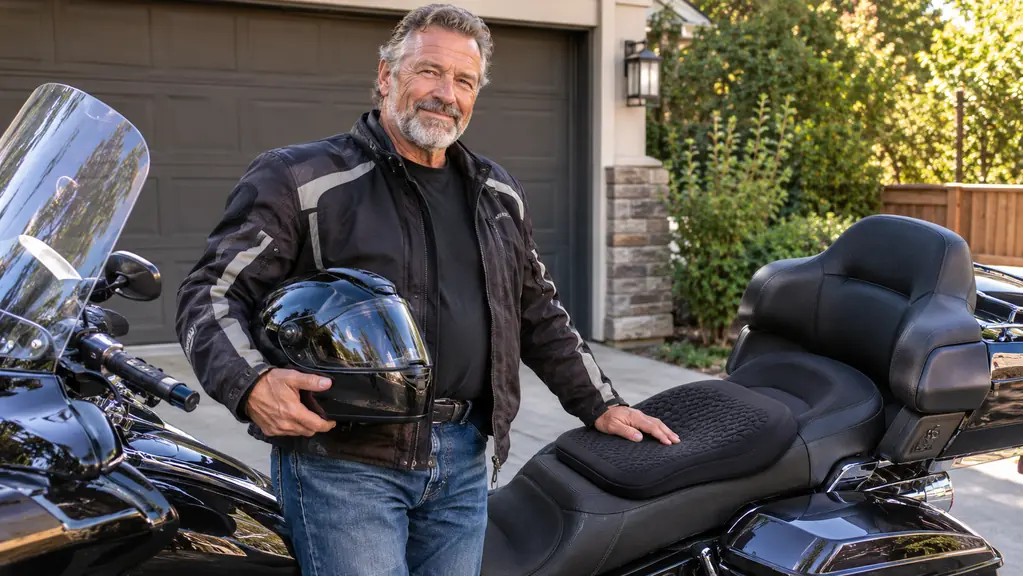
What the Specs Sheet Tells You
The SKYJDM cushion is a large gel pad with a butterfly shape, about 15.7 by 13.8 inches, and it's 1.18 inches thick. The fill is TPE gel, which is the soft, slow-responding stuff that spreads pressure instead of bouncing back at you. The specs call it breathable, with a 3D honeycomb structure inside that lets air move through. It weighs 0.96 kg, folds flat, and the care instructions are simple: keep it out of prolonged direct sunlight and extreme heat. That last line matters more than it looks, because it tells you the one thing gel can't do: it doesn't like being baked.
What the spec sheet doesn't tell you is what it feels like at hour five, so here's that part. The honeycomb structure isn't marketing noise. You can feel air moving under you on a warm day, and the gel itself is soft enough that your sit bones sink in instead of sitting on top of a hard shelf. The first morning with it, I rode from Pittsburgh to the Virginia line without once standing on the pegs to shake the stiffness out, which is something I can't say for the stock seat. Somewhere around Roanoke I realized I'd gone two full hours without shifting, and that never happens on a bare seat. It's not a pillow, and it won't turn a brick of a seat into a La-Z-Boy. But it takes the edge off the pressure points that turn a good ride into a chore. On the days I rode without any pad, I was reminded why I bother.
Where the SKYJDM Gel Cushion Wins
Pressure is the whole game on a touring bike. Your stock seat might be fine for an hour, but by hour three you're shifting around, and by hour five you're standing on the pegs just to get blood moving again. The SKYJDM cushion attacks that directly. The gel fill spreads your weight across a bigger footprint, and the honeycomb core soaks up the constant small vibration that makes your hands and backside go numb. On my bike, the difference showed up around hour two: I stopped doing the butt shuffle every twenty minutes. I noticed the vibration difference in my mirrors too. With the gel pad under me, the image stayed steady enough to read a license plate behind me. On the bare seat, everything shimmied at speed.
It's also the easiest piece of gear I own. The whole thing weighs 0.96 kg and folds flat, so it goes in a saddlebag without a second thought. It's a universal fit, sized for most motorcycles, so there's no trimming or strapping to sort out. I keep it in the right saddlebag behind the tool roll, and it takes up less room than a folded jacket. When I stop for the night, I carry it into the hotel with my helmet, which takes about ten seconds and means it's never sitting in the sun or the dew. At the end of a wet or dusty day, I wipe it down with a damp rag and it's ready to go again. No brushing, no washing, no waiting for it to dry. That sounds like a small thing until you've owned gear that needs a whole maintenance routine.
The foldable part is the sleeper feature. Because it folds, I can take it inside with me at the end of the day, which matters for a pad whose care instructions say to avoid extreme heat. It also means I can take it off the seat entirely when I'm just running errands around Pittsburgh. A sheepskin pad lives on the bike and stays on the bike. This one is a tool I can use when I need it and stow when I don't.
Around hour two, I stopped doing the butt shuffle every twenty minutes.
Where Sheepskin Wins
I'll be straight with you: on a hot day, sheepskin is hard to beat. Wool does something a gel pad can't. It wicks moisture away from your skin, keeps air moving around you, and it doesn't hold heat the way a slab of gel does. The SKYJDM care tag tells you to keep it out of extreme heat, and you can feel why on an August afternoon. The gel warms up under you. The sheepskin stays comfortable. On the hottest day of the sheepskin test, a bank sign in South Carolina read 94 degrees, and when I got off at a rest stop my riding pants were dry where they'd been pressed against the wool. On the same stretch with the gel pad two weeks earlier, I'd peeled myself off the seat with a sweat patch on the back of my pants. If you ride through the southern states in the middle of summer, that's a real argument, and I'm not going to pretend otherwise.
Sheepskin also wins the grip argument. The wool fibers grab your riding pants and keep you planted through corners and hard braking. A gel cushion sits on the seat, and on a smooth surface it can shift, especially when you're moving around on it. Wool doesn't have that problem. And on cold mornings, sheepskin holds warmth against you, while gel just sits there at whatever temperature it is. Riders who do a lot of shoulder-season riding, or who spend hours in stop-and-go traffic with engine heat coming off the bike, tend to swear by sheepskin for those reasons.
The catch is upkeep. A good sheepskin pad needs to be washed carefully, brushed out, and dried slowly so the hide doesn't shrink. Get it wrong and you end up with a stiff, matted mess. It's also bulkier to store, and most of them need straps or trimming to fit your particular seat. None of that makes sheepskin bad. It just means it's a commitment. You're trading a little daily effort for the best heat and moisture management money can buy. For some riders, that's exactly the right trade.
If pressure is your problem, this is the fix.
The SKYJDM gel cushion spreads your weight, soaks up vibration, folds flat, and wipes clean. It's the low-maintenance answer for riders whose tailbone quits before the bike does.
Amazon Check Today's Price on Amazon →Who Should Buy Which
Buy the SKYJDM gel cushion if your problem is pressure: tailbone pain, lower back ache, the numbness that sets in at hour three. It's the lower-effort, lower-maintenance answer, it works on almost any bike, and it's less effort to live with day to day. Buy sheepskin if your problem is heat and moisture, or if you ride in cold weather and want something that holds warmth. If I could only keep one, I'd keep the SKYJDM, because pressure is what ends my long days. But if you ride in a hot climate and your backside is fine until the heat sets in, sheepskin will serve you better. Know which problem you're actually solving before you spend the money.
One more thing to consider: how you ride. If you're doing mostly day rides with the occasional long weekend, the gel cushion's easy upkeep wins. If you're planning a multi-week trip through hot country, the sheepskin's comfort in heat starts to look worth the maintenance. And if you're like me and you ride one bike, one route, year after year, you'll figure out your answer in a couple of long days. Neither choice is wrong. They're just answers to different questions. And if you're shopping for a passenger too, keep in mind that the pillion seat is usually worse than the rider's seat. Linda rides with me on shorter trips, and the first thing she asked about was a pad for her side. The gel cushion works there too, since it's foldable and easy to move around.
The Bottom Line
After a couple of Myrtle Beach trips and a lot of weekend rides on each pad, here's where I landed. The SKYJDM gel cushion is the better all-around buy for most touring riders. It solves the problem that actually ends long days, which is pressure and vibration, and it does it without adding a maintenance routine to your life. The sheepskin pad is the better specialist. It manages heat and moisture better than anything gel can do, and it grips you in place. But it asks more of you in return.
Me, I keep the SKYJDM on the bike. It folds, it wipes clean, it spreads my weight, and it's the difference between walking stiff at the Myrtle Beach hotel and walking like a human being. If your seat is the thing standing between you and the long rides you want to do, that's the one I'd start with. And if you try it and find heat is your real enemy, sheepskin will still be there waiting.
One more note on sizing. The SKYJDM comes in a large size, and it's made for most motorcycles, but it's still worth laying it on your seat before a long trip and making sure it sits where you need it. A pad that's an inch off can be the difference between a good day and a day you can't wait to end. Same goes for a sheepskin pad: measure your seat, not your hopes.
Start with the one that's easier to live with.
The SKYJDM gel cushion does the most good for the least effort. If it's not the right answer for your seat, you'll know within a couple of rides, and you won't have spent a season maintaining it to find out.
Amazon Check Today's Price on Amazon →