
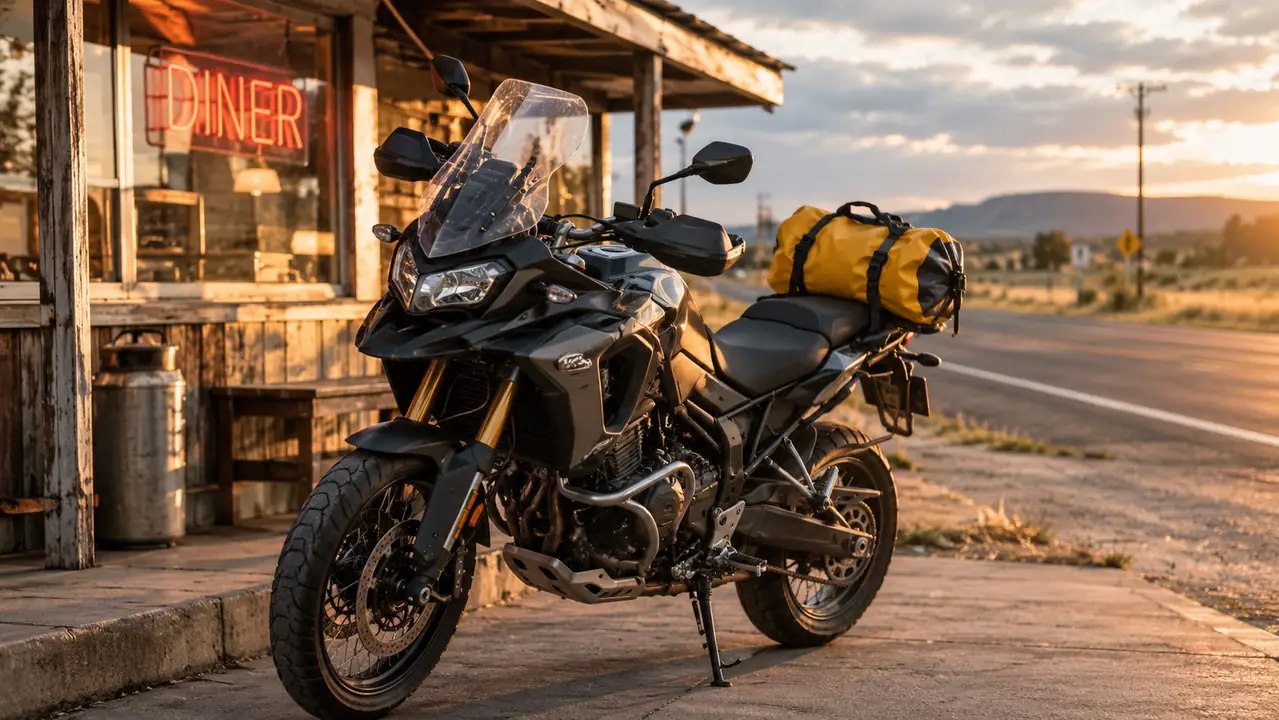
Here is what nobody tells you about buying a dry bag for a motorcycle: the listing photo makes it look like a simple sack, and the reviews make it sound like the last word in waterproof gear. The truth sits somewhere in between, and you only find out where after a few hundred miles of rain, heat, and the kind of vibration that works every zipper and buckle loose. I bought the IRON JIA'S Motorcycle Dry Bag last spring for the annual ride from Pittsburgh down to Myrtle Beach, and I have used it on enough weekend trips since that I can tell you exactly what it does well and where it will annoy you.
This is the 30 liter version, the one that fits a long weekend of clothes and a few extras without turning the back of the bike into a suitcase. I have strapped it to the passenger seat of my Indian Chieftain, loaded it wet, loaded it dry, and left it out in a downpour at a Virginia rest stop. It has not leaked a drop. That is the headline. The rest of this review is about everything else, because the things you do not see in the photos are the things that decide whether you will still be using this bag in two years.
The Quick Verdict
A genuinely waterproof 30 liter roll-top bag with good straps and a sensible internal pocket, at a price that makes sense. It is not the most refined bag you can buy, and the mounting straps take some fiddling on some bikes, but for the money it does the one job that matters: it keeps your gear dry.
Amazon Check Today's Price →The dry bag that has kept my gear dry through two Myrtle Beach runs
If you want a roll-top dry bag that actually seals and straps down tight, this is the one I keep reaching for. Check today's price on Amazon before the listing changes.
Amazon Check Today's Price on Amazon →How I've Used It
I am not a gear collector. I have one motorcycle, a 2019 Indian Chieftain, and I have been riding for about 35 years, so I tend to buy something, use it hard, and only replace it when it actually fails. The IRON JIA'S bag has been on the bike for roughly six months, which means it has done the trip to Myrtle Beach and back, a couple of shorter overnights in the Alleghenies, and a lot of weekend rides where it sat on the passenger seat with nothing in it but a jacket and a bottle of water.
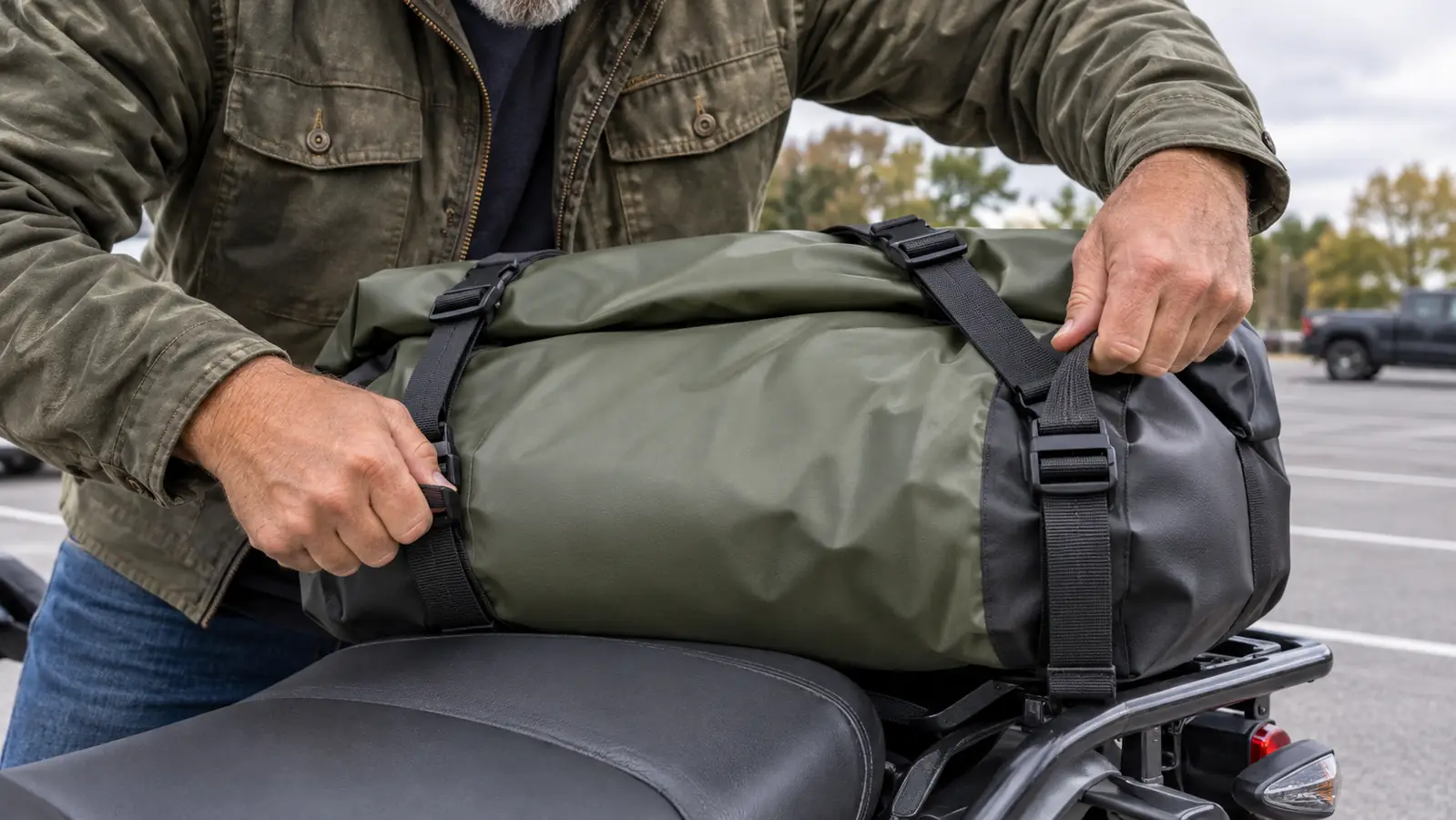
The bag is rated at 30 liters and measures 21.7 inches long by 11.8 inches wide by 8.7 inches high. Those numbers matter more than you think. It is long enough to lay a change of clothes flat, but narrow enough that it does not hang over the sides of the seat and catch the wind. The material is 500D PVC with high-frequency welded seams, which is the part that actually does the waterproofing work. There is no stitching through the bottom of the bag to leak water, which is the first thing I check on any dry bag. The whole thing weighs 1.18 kg empty, light enough that I forget it is on the bike. My first attempt at mounting it took the better part of ten minutes and ended with the bag twisted sideways because I had the buckles facing the wrong way. I pulled it off, flipped the straps, and had it solid in under two minutes the second time. That is the whole learning curve, and it is not a hard one. I mention it only because the listing makes the straps look self-explanatory, and they are not quite.
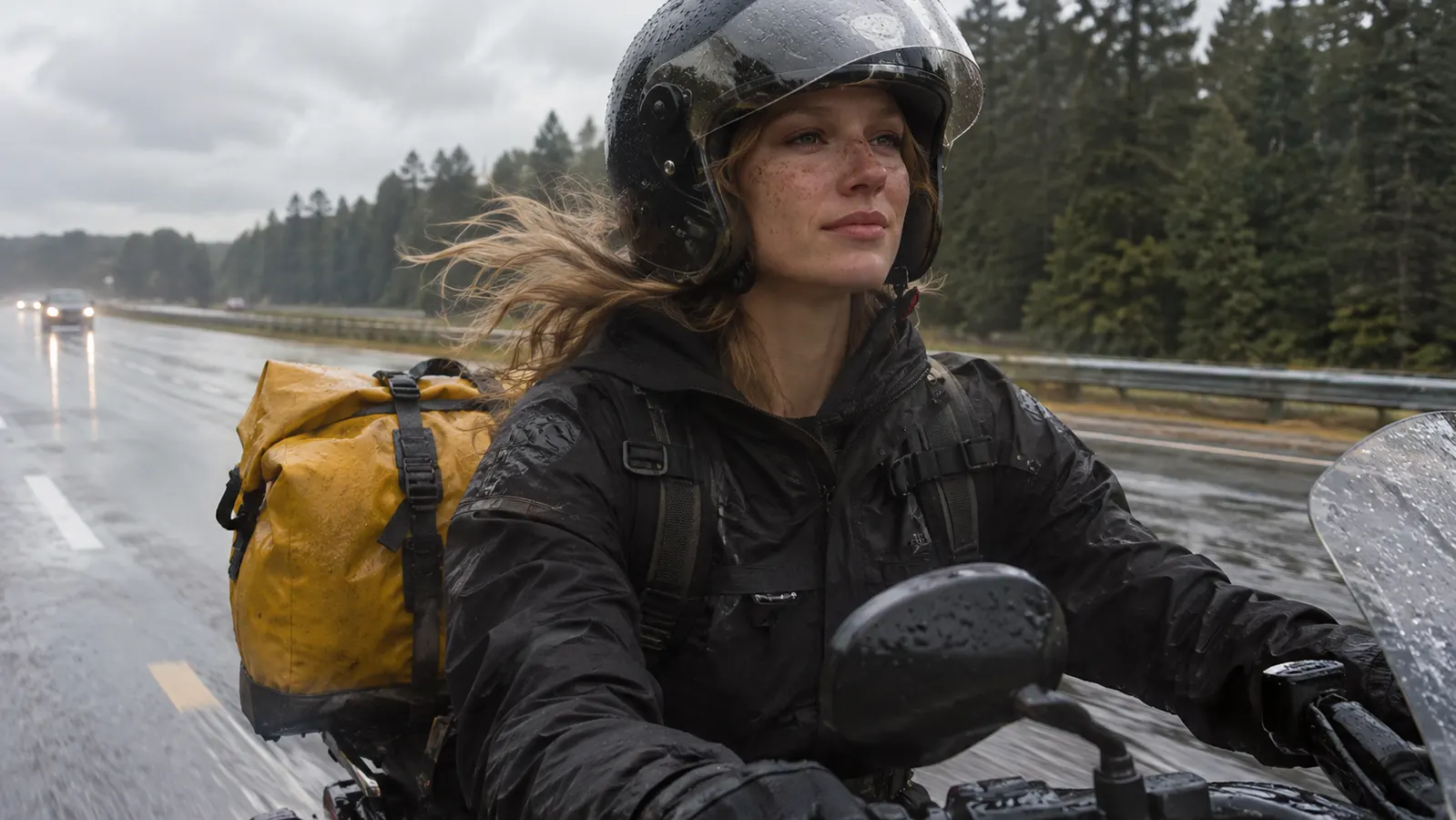
I have tested it the honest way: packed it full, rolled the top three times, clipped the buckles, and then driven through a rainstorm that had me pulling over twice because I could not see. That storm hit just south of Roanoke on the second morning of the Myrtle Beach run, around 11 o'clock, and it came down hard enough that the trucks were throwing up spray you could not see through. I pulled off at a rest stop, checked the top roll, and it was sitting tight. At the motel that night, every shirt in the bag was dry, including the one I had stuffed against the rolled end. That is the whole review in one sentence, but I will keep going because there are a few things about the bag that only show up after you have lived with it.
What I Like: The Part That Works
The waterproofing is the reason to buy this bag, and it is not a gimmick. The 500D PVC material is thick enough to shrug off brush and scrapes, and the welded seams mean there is no needle hole for water to find. I have laid the bag flat in the bed of a friend's truck with the top rolled, and it sat in standing water for an hour without a drop inside. That is the test that matters for a motorcycle bag, because your bag will end up on wet ground at some point. It happened to me at a gas station in West Virginia last fall: I set the bag on the pavement while I fueled up, and the guy at the next pump pulled forward and splashed a puddle right over it. I did not think much of it until I got to the motel and remembered. Unrolled it, and the clothes inside were bone dry. That is the kind of thing that turns a skeptic into a believer, and I say that as someone who has ruined a duffel bag the exact same way.
The internal pocket is another thing I did not expect to use as much as I do. It is sized for a laptop up to 15 inches in the 30 liter bag, which is just big enough for a tablet and a paperback and a charging cable. It keeps the small stuff from ending up in the bottom of the bag, which is where small stuff always ends up in a duffel. The pocket is not padded, so I would not trust it with a laptop on a rough road, but for a tablet wrapped in a shirt it is exactly right. I keep my reading glasses, my wallet, and a small first aid kit in there on every ride, and it is the first thing I grab when I pull over for the night.
The straps are also better than I expected for a bag at this price. The mounting straps are adjustable and removable, which means you can run them under the seat, around a sissy bar, or across the passenger grab handles depending on your bike. I have used them all three ways. The shoulder strap is nothing special, but it is comfortable enough to carry the bag from the motel room to the bike without digging in.
I packed it full, rolled the top three times, and drove through a rainstorm that had me pulling over twice because I could not see. Every shirt in the bag was dry.
What Nobody Tells You: The Cons
Here is where the honest part starts. The first thing you will notice is that the bag is not easy to pack when it is on the bike. Because it is a soft shell with no frame, it slouches when it is not full, and the top roll does not hold its shape the way a hard case does. You have to pack it tight or use the internal pocket to fill the empty space, or the whole thing looks like a half-empty pillowcase strapped to your seat. I learned this on a Saturday morning ride up to the Alleghenies when I threw in a jacket and a sandwich and called it packed. By the time I got to the ridge, the bag had folded over on itself and the top roll was pointing at the taillight. It stayed put, but it looked wrong and it caught more wind than it needed to. Pack it full and it is a different bag.
The second thing is the mounting straps. They are adjustable and they are removable, which is good, but they are also just straps with buckles. There is no quick-release system and no built-in locking mechanism. On my Chieftain I run them under the passenger seat and around the grab rails, and they hold fine, but I have to re-tighten them after the first hour of riding. The bag settles, the straps stretch a little, and if you do not check them at the first fuel stop, you will hear the bag start to flap on the highway. That happened to me on the way home from Myrtle Beach last fall. I stopped for gas around Fayetteville, and when I got back on the interstate, the bag was drumming against the rear fender every time I hit a patch of rough pavement. I pulled off at the next exit, loosened the buckles, pulled the straps snug again, and it was quiet for the rest of the day. It is a five-minute fix, but it is a five-minute fix you will do on every long ride until you learn how the bag settles.
The third thing is the closure. The listing calls the closure type BAG007, which tells you nothing, so here is what you need to know: it is a roll-top with a clip buckle on each side. The buckles work, but they are plastic and they are the part most likely to fail after a few seasons of sun and cold. I have not broken one yet, but I can see where the plastic will get brittle after a couple of years. If you ride in extreme cold or leave the bike parked in the sun all day, plan on replacing the buckles eventually. They are standard hardware, so it is an easy fix, but it is a fix you will have to make.
What I Liked
- Genuinely waterproof: the 500D PVC and welded seams have kept gear dry through downpours and a puddle splash
- Good capacity: 30 liters fits a three-day trip with room for boots, a tool roll and a spare pair of gloves
- Straps are adjustable and removable, so they work under a seat, around a sissy bar or across grab rails
- Internal pocket sized for a 15-inch device keeps small items from sinking to the bottom of the bag
- Light at 1.18 kg and packs down small when empty
Where It Falls Short
- Soft shell slouches when not packed full and will not hold its shape like a hard case
- Mounting straps need re-tightening after the first hour on the highway
- Plastic clip buckles will likely get brittle after a few seasons of sun and cold
- No quick-release or locking mount, so securing it takes a couple of minutes
Capacity and Packing: What Actually Fits
Thirty liters sounds small until you pack it right. I have fit three days of clothes, a pair of boots, a toiletry kit, a rain jacket, and a small tool roll in this bag with room to spare. The key is to roll clothes instead of folding them, and to use the internal pocket for anything flat. The bag is 21.7 inches long, which is longer than it looks in photos, and that length is what makes it work for a weekend trip. For the Myrtle Beach run I packed five t-shirts, two pairs of jeans, a hoodie, a pair of sneakers, my shaving kit, and a paperback, and I still had room for a bag of trail mix and a spare pair of gloves. The boots go in first, soles against the rolled end, and everything soft goes around them. If you have ever packed a dry bag, you know the trick: fill it full enough that the roll has something to bite on, because a half-empty roll-top will not seal as tight.
The 30 liter size is the one I would recommend for most riders. The 50 and 70 liter versions exist, and they are fine if you are hauling camping gear, but they get bulky on the passenger seat and they catch more wind. On a touring bike like my Chieftain, the IRON JIA'S 30 liter sits low and stays out of the way. On a smaller bike, it will still work, but you will want to check the mounting points before you buy. I have also learned to pack the heaviest stuff at the bottom and keep the top roll area light, because a heavy load up high makes the bag want to tip sideways in a turn. That is not a flaw in the bag, it is just physics, and it is true of any soft tail bag.
Fit on the Bike: What to Check Before You Buy
The listing says universal fit, and that is mostly true, but universal means it fits a range of bikes, not that it fits every bike perfectly. The bag mounts with straps, so the real question is where you can run those straps on your particular motorcycle. On my Chieftain, I run them under the passenger seat and around the grab rails, and they hold fine. On a bike with a sissy bar, you can run them around the bar. On a bike with no grab rails and no sissy bar, you will need to get creative, because the bag has no rigid mounting plate and no hooks of its own.
The other fit issue is the passenger seat. If you carry a passenger, the bag takes up the seat. That is true of any tail bag, but it is worth saying plainly because the listing photos never show it. My wife Linda rides pillion on shorter rides, and when the bag is on, she is not riding. For the Myrtle Beach trip she takes the car anyway, so the bag lives on the passenger seat for the whole ride. If you need the seat for a passenger, you will be moving the bag to a rear rack or carrying it differently.
Who This Is For
This bag is for the rider who wants one simple thing: a waterproof way to carry a weekend of gear without spending a fortune or bolting a hard case to the bike. It is for the rider who packs for a trip, rides through weather, and does not want to think about whether the clothes in the bag are getting wet. If that is you, the IRON JIA'S bag is a genuinely good choice, and it has earned its place on my bike.
Who Should Skip It
Skip it if you need a hard shell that locks to the bike, or if you carry a laptop and need padded protection. Skip it if you want a bag that mounts in seconds with a quick-release system, because this one takes a couple of minutes to strap down and you will re-tighten it at the first stop. And skip it if you are the kind of rider who wants a bag that looks brand new after a season of use, because PVC shows scuffs and the buckles will eventually need replacing. None of that is a dealbreaker for me, but it is the truth about what you are buying.
Still on the fence? This is the bag I keep on the bike
The IRON JIA'S dry bag has done two Myrtle Beach trips and a lot of weekend rides without leaking once. If you want a roll-top dry bag that does the job without the fancy price tag, check today's price on Amazon.
Amazon Check Today's Price on Amazon →