

I'll be honest with you: I did not expect to like these as much as I did. I bought the SAVIOR HEAT heated motorcycle gloves last fall with my own money, mostly because I was tired of pulling over at mile 80 to flex my fingers back to life. I'm Hank, I've ridden about 35 years, and my hands have been the weak point of every cold-weather ride I've ever done. So I kept notes all winter. What follows is the straight story about warmth, wiring, fit, and the places where these gloves simply have limits.
The short version: the SAVIOR HEAT gloves are a solid buy for a rider who wants battery-powered heat without spending a fortune, but they are not the warmest thing you can put on your hands, and the battery life will make you plan your route around it. I'd buy them again. I'd also carry a backup pair of liners. That's the honest review in two sentences.
The Quick Verdict
Genuinely warm in the 30s and 40s, easy to use, and the touchscreen fingertips actually work. Battery life is the catch, and the sizing runs small.
Amazon Check Today's Price →Want warm hands on your next cold ride?
I rode a full Pennsylvania winter in these and they earned their place in my gear bag. Check today's price on Amazon and see if your size is in stock.
Amazon Check Today's Price on Amazon →How I've Used Them
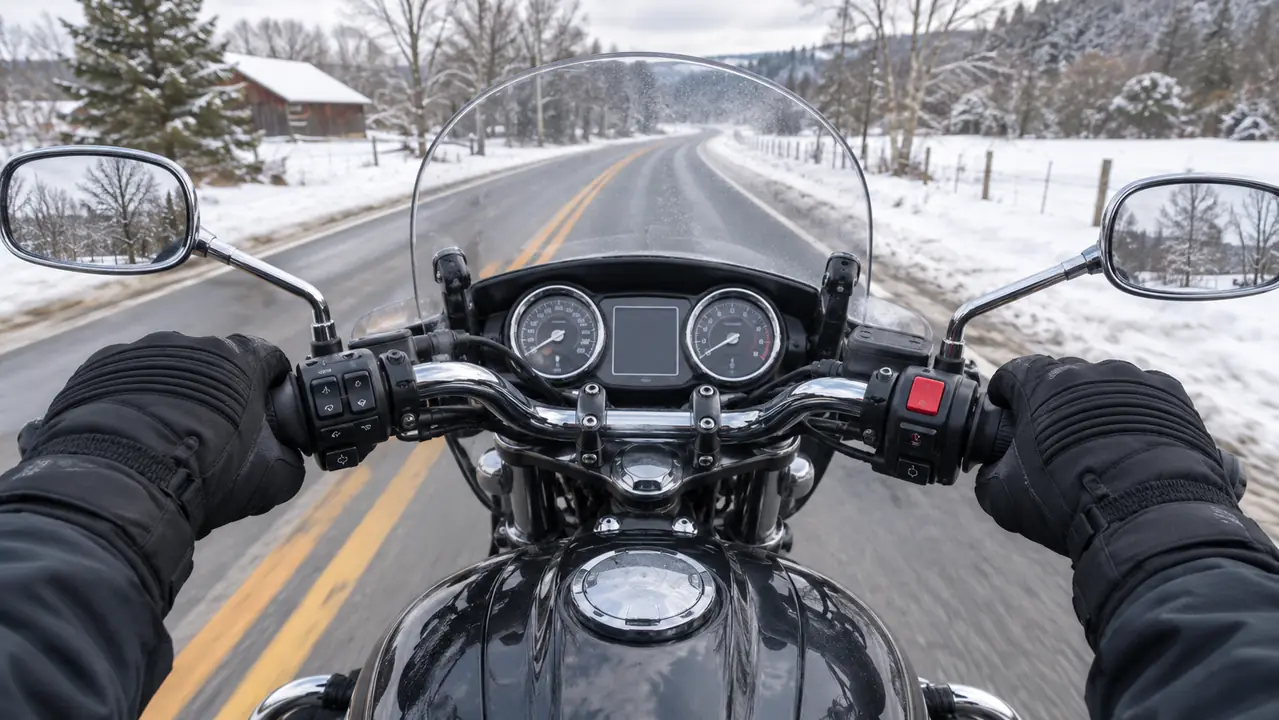
I wore these gloves on every cold ride from October through March. That included my annual Pittsburgh to Myrtle Beach run in November, a couple of shorter overnight trips, and a lot of Sunday morning rides where the temperature was sitting right around freezing. I ride a 2019 Indian Chieftain, so I've got fairing and heated grips as a baseline. These gloves went on top of that, and the combination is what I'd actually recommend to a friend.
My test was simple. I rode until my hands told me the truth. On a 38-degree morning with the gloves on medium heat, my hands stayed comfortable for about two hours and twenty minutes. On the high setting, that dropped to maybe two hours before the battery indicator started blinking. On low, I got close to four hours, but low is not enough once the wind is really moving.
I remember the first real test clearly. It was the first Sunday of November, and the temperature was sitting at 31 degrees when I pulled out of the driveway. My plan was a 90-mile loop up through the hills east of Pittsburgh, and I told Linda I'd be back by noon. The heat went on before I even reached the end of the block, and I could feel it working through the backs of my fingers within seconds. By the time I hit the interstate, my hands were the warmest part of me. That had never happened before in 35 years of riding. I stopped at a gas station about 45 miles in, just to check, and my hands were actually sweating inside the gloves.
The Myrtle Beach run in mid-November was the real test. I left Pittsburgh on a Thursday morning with the temperature at 34, heading south on the first leg to my overnight stop in Virginia, about 320 miles. I ran the gloves on medium for the first two hours, then dropped to low once the sun climbed and the temperature moved toward 45. The second morning was colder, 29 degrees in the hotel parking lot, and I ran them on high for the first hour. That's the kind of riding these gloves were built for, and the kind where they earn their keep.
The battery packs sit in a pocket on the back of the wrist and connect with a cable. The zipper closure keeps them in place, and I never once had a pack pop out, even when I was wrestling the bike through a gusty crosswind on the interstate. The controls are simple: a button on each glove cycles through low, medium, and high. No app, no Bluetooth, no fiddling. That's a feature, as far as I'm concerned.
What the Specs Actually Say
The SAVIOR HEAT listing calls these professional heated motorcycle gloves for men and women, with a 7.4V rechargeable battery and adjustable thermal control. The shell is 40% lambskin and 60% polyester, and the gloves are described as water-resistant, windproof, and breathable. The lining is 100% cotton jersey. They close with a zipper, they're machine washable per the care instructions, and they're touchscreen compatible.
Here's what the specs do not tell you. Water-resistant is not waterproof. I found that out on a wet November afternoon between Richmond and the North Carolina line. The gloves shed light rain fine, but a steady soaker will eventually find its way in through the seams, and once the lining is wet, the heat does not feel like heat anymore. It feels like a damp hand warmer. Plan for that.
The touchscreen compatibility is real, and it surprised me. I stopped for gas, pulled out my phone, and the fingertip worked on the first try. That's rare in my experience. Most heated gloves with a conductive fingertip still make you stab at the screen three or four times. These worked every time I needed them.
Warmth: The Part Everybody Asks About
The heat elements cover the back of the hand and the fingers, which is exactly where the cold hits first on a motorcycle. The palms get less heat, which is fine, because the palms are pressed against the grips and the grips are doing some of the work. The thumb gets heat too, and that matters more than you'd think. Your thumb is what works the turn signals and the horn, and a numb thumb makes every button push a guess.
On medium heat, these gloves kept my hands comfortable down to about 35 degrees at highway speed. That's with heated grips underneath. Without the grips, I'd call the floor closer to 40. Below that, I wanted the high setting, and high drains the battery faster than I'd like. The math is the math: a 7.4V pack can only hold so much, and heat takes power.
Two hours and twenty minutes at 38 degrees with the heat on medium. That's the number I wrote in my notebook, and it's the number that matters.
The coldest morning I rode in them was 24 degrees, a 120-mile run up toward Erie for a union meeting. The wind was coming straight off the lake, and I knew going in it was going to be a test. On high heat, with my wind deflectors up and a thin pair of liner gloves underneath, my hands stayed rideable for about an hour and a half. The backs of my fingers were fine. The tips were the first to complain, and that's a detail worth knowing. The heat is strongest across the back of the hand and the middle of each finger, and the very ends of the fingers are always going to be the coldest part on any battery glove, because that's where the stitching is and where the warmth runs out.
I also learned something about wind that day. At 55 miles an hour, a 24-degree morning feels like about 10 degrees on your hands. The windproof shell is a real thing, not a marketing word, and it does its job. But windproof is not the same as insulated. The warmth in these gloves is mostly the battery, and the battery is finite. On a day like that, I was watching the clock as much as the road.
If you ride in single digits or below zero, these are not the gloves for you. Not because they're bad, but because no battery glove in this class is going to keep you warm for hours in that kind of cold. You need a heated liner system wired to the bike for that, or you need to accept that you'll be stopping to swap batteries. I'd rather tell you that now than have you find out at mile 50.
Fit and Sizing: Read This Before You Order
SAVIOR HEAT sizes these gloves small. I wear a large in most riding gloves, and the large in these fits me like a medium. The fingers are a touch short, and the palm is snug across the widest part of my hand. If you're between sizes, size up. I cannot say this strongly enough, because a heated glove that fits too tight is worse than no heated glove at all. The tightness cuts circulation, and reduced circulation means cold fingers no matter what the battery is doing.
The zipper closure helps. You can get the glove on and off without fighting a gauntlet, and the zipper sits on the outside of the wrist where it doesn't dig in. The ambidextrous design means there's no left and right glove to keep straight, which sounds like a small thing until you're packing at 6 a.m. in a hotel parking lot.
One thing to know: the battery packs add bulk at the wrist. That's fine on a touring bike with room under the cuff, but if you wear a jacket with tight cuffs, you'll feel the pressure. I wear a riding jacket with a relaxed fit and had no problem. Linda tried them once on a shorter ride and her jacket cuffs were too snug over the packs. Try them with your jacket before you commit to a long trip.
Battery Life and Charging
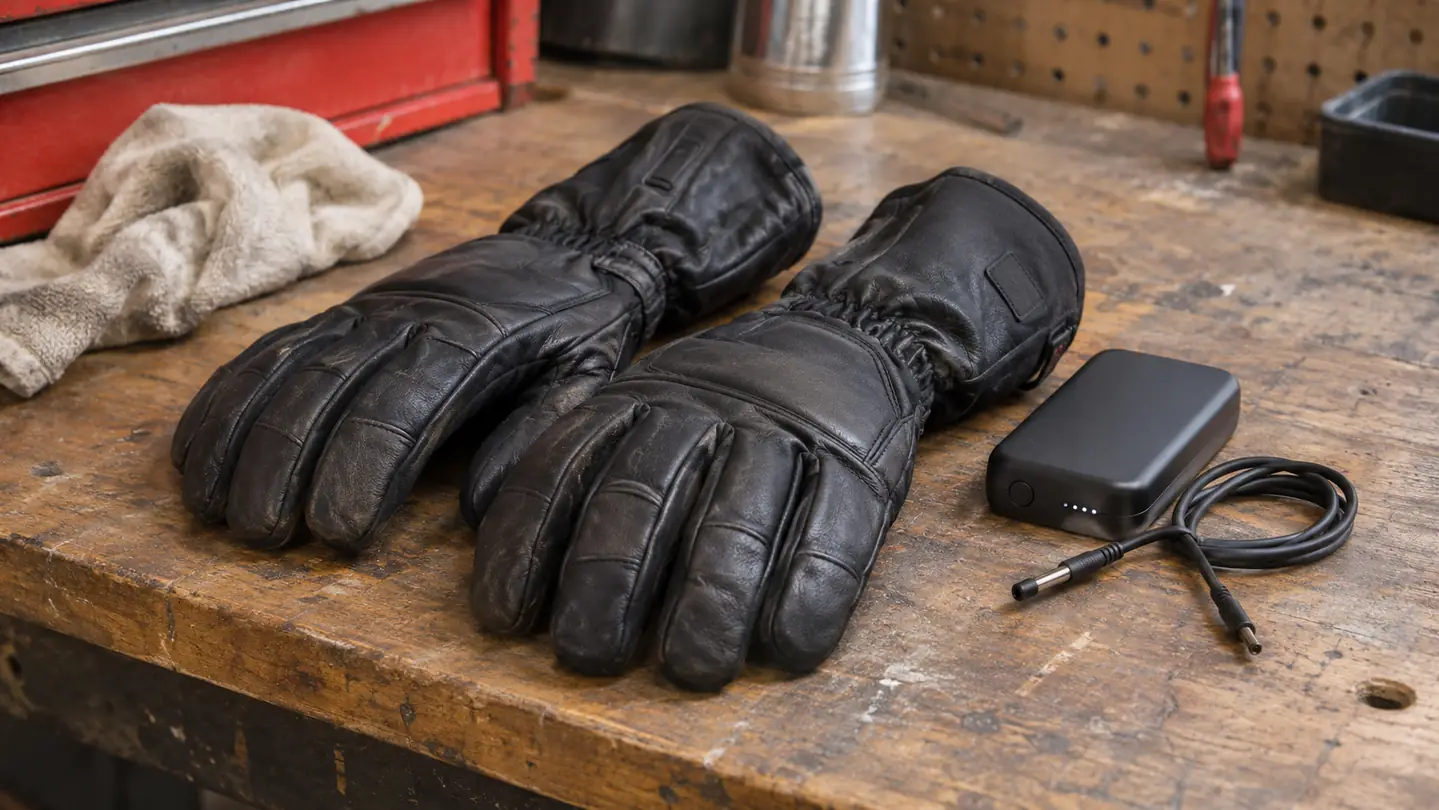
The rechargeable battery packs are the heart of this system, and they're also the limit. On a full charge, I got about two hours on high, two and a half to three on medium, and close to four on low. The low setting is fine for a 45-degree day with no wind, but it is not enough for a 30-degree morning at interstate speed.
My habit became a simple routine. Charge both packs the night before a ride, keep one set in the gloves and a spare set in the saddlebag, and swap at the halfway point if the day is cold. The packs are small enough to fit in a jacket pocket, and the cable connection is solid. I never had a pack lose connection mid-ride, which I cannot say for another pair of heated gloves I tried a few years back.
The charging setup is straightforward. The packs charge from a standard USB source, and the indicator light tells you when they're full. I charged mine overnight and never had a problem. The one piece of advice I'll give: don't trust the battery meter completely. When the heat starts to feel weaker, it's not your imagination. That's the pack telling you it's about done.
I learned the battery lesson the hard way in February. I'd charged both packs the night before, or so I thought. One of them had a habit of not seating fully on the charging cable, and the indicator light looked green when it wasn't actually charging. I got about 40 minutes into a ride to the hardware store before the left glove went cold, and then dead, and I spent the rest of the ride with one warm hand and one cold one. It was a 25-minute ride. I was annoyed the whole way. After that, I made a habit of checking the indicator light on each pack before I zipped the cuff, and I never had a surprise like that again.
The other thing I learned is that cold weather affects the packs themselves. A battery that has been sitting in a 30-degree garage charges slower and drains faster than one kept inside. I started bringing the packs into the house the night before a ride, charging them on the kitchen counter, and keeping them in my jacket pocket until I was ready to put the gloves on. That simple change added maybe 20 minutes of heat on the coldest mornings. It's not in the manual, but it's real.
What Nobody Tells You
Here's the thing nobody puts in the marketing copy. A battery heated glove changes how you plan a ride. You stop thinking about whether you're warm and start thinking about how much battery you have left. That's a trade, and it's a fair one, but you should know it going in. On my Myrtle Beach run, I stopped at the halfway point in Virginia, swapped in fresh packs, and never thought about my hands again until the next morning.
The other thing nobody tells you is that these gloves are not a replacement for good cold-weather gear. They're a supplement. On the coldest mornings, I still wore a thin liner underneath, and I still used my handlebar wind deflectors. The gloves did their job. They just can't do the whole job alone.
And the third thing: the machine wash instruction is real, but treat it with care. I washed mine once on a gentle cycle and air dried them, and they came out fine. I would not make a habit of it. The leather shell and the wiring don't love repeated washing, and a pair of heated gloves is an investment you want to last more than one season.
The rain test came on a Tuesday in early December, a day I should have known better than to trust. The forecast said light showers, and the first hour was fine, just a few spits of rain that beaded up on the shell. Then the sky opened up about 30 miles from home, and I rode through a solid 20 minutes of steady rain. The gloves kept my hands dry for most of it, but by the time I got home, the seams on the inside of the thumb were damp, and the next morning the left glove had a faint smell of wet leather. I dried them slowly, away from the heater, and they were fine. But I stopped treating them as rain gear after that day.
The planning thing is the part I keep coming back to. Before these gloves, a cold ride was a simple equation: dress warm, ride, hope your hands survive. Now it's a small logistics problem. Where are the packs? Are they charged? Do I have spares? Is the ride long enough that I need to plan a swap? It sounds like a hassle, and it is, a little. But the trade is that my hands are actually warm, and after 35 winters of cold hands, I'll take the logistics.
What I Liked
- Heat comes on fast and covers the back of the hand, fingers, and thumb
- Touchscreen fingertips that actually work on the first try
- Simple button controls with no app or Bluetooth to fight
- Solid zipper closure and ambidextrous design make them easy to use
- Rechargeable 7.4V packs with a dependable cable connection
Where It Falls Short
- Battery life tops out around two hours on high heat
- Sizing runs small, so order a size up if you're between sizes
- Water-resistant, not waterproof, and steady rain finds the seams
- Battery packs add bulk at the wrist under tight jacket cuffs
- Not enough for extreme cold below single digits
Who This Is For
These gloves are for the rider who rides in the 30s and 40s, wants real heat without wiring gloves into the bike, and is willing to plan around battery life. They're for the commuter who needs warm hands for a 45-minute ride to work and back. They're for the touring rider who wants a backup layer of heat on a long cold day. If that sounds like you, the SAVIOR HEAT gloves are a genuinely good value.
Who Should Skip It
Skip these if you ride in serious cold, below about 10 degrees, for hours at a time. Skip them if you need a waterproof glove for a rainy climate, because these are water-resistant at best. And skip them if you hate managing batteries, because the battery is the whole game here. For those riders, a heated liner wired to the bike or a dedicated winter gauntlet is the better answer.
Bottom line: I'd buy them again
After a full winter and a 600-mile trip, the SAVIOR HEAT gloves earned their spot in my gear bag. See today's price on Amazon and decide for yourself.
Amazon Check Today's Price on Amazon →